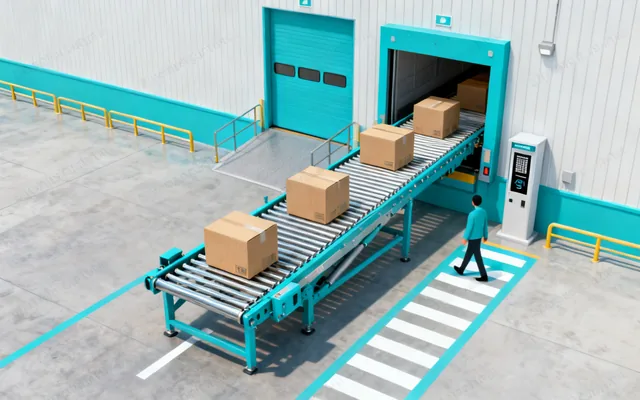
Inbound induction conveyors
Receiving still needs carton quality rules, temporary lane ownership and putaway release timing before accumulation rates become useful on the trunk line.

Balance merge logic, divert accuracy, buffer occupancy and WCS timing so cartons per hour hold through the sustained shipping cutoff—not only a clean-run demo rate on an empty line.

Each workstream converts an operational concern into measurable inputs, interfaces and evidence that operations, controls, maintenance and EHS teams can review together.
Validate rate against SKU mix, order profile, peak window, accumulation, replenishment and exception recovery so a fifteen-minute burst is not mistaken for stable shipping capacity.
Document WMS, WCS, WES, PLC and equipment ownership for release, divert confirmations, alarms and restart authorization before FAT scripts freeze.
Keep maintenance access, diagnostics, critical spares and recovery procedures visible before operational handover, including mean time to repair exposure on critical merges.
Protect live fulfillment with controlled cutover, fallback states, commissioning windows and measurable acceptance gates when brownfield lines stay online.
Cards follow material flow rather than abstract technology labels. Open an inquiry when load units, divert destinations and peak assumptions are known.
Receiving still needs carton quality rules, temporary lane ownership and putaway release timing before accumulation rates become useful on the trunk line.
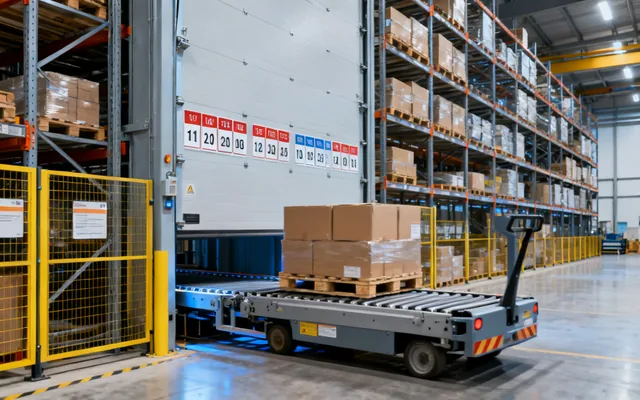
Density gains must keep selectivity, fire aisles and recovery pull-outs explicit; inventory cube utilization alone is not a complete conveying concept.
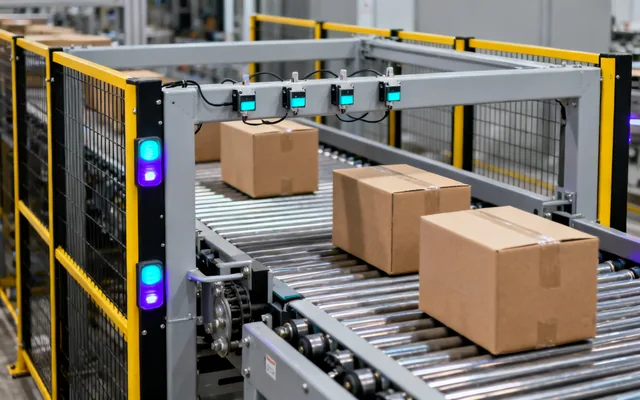
Mission timing is defined with zero-pressure zones, queue limits, duty cycle and the recovery path when a destination cannot accept a load.
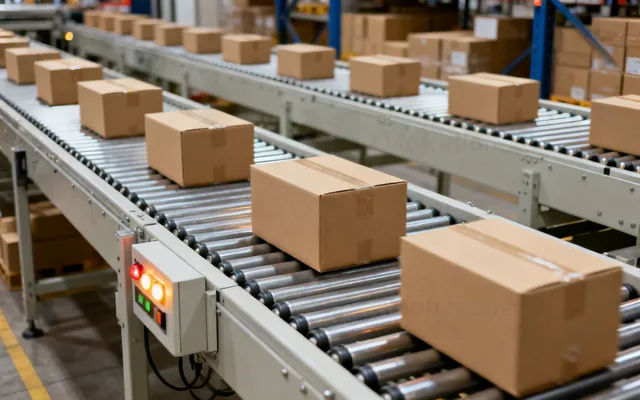
Pick-rate statements require SKU velocity bands, order lines per hour and replenishment cadence stated with the peak window and buffer occupancy rules.
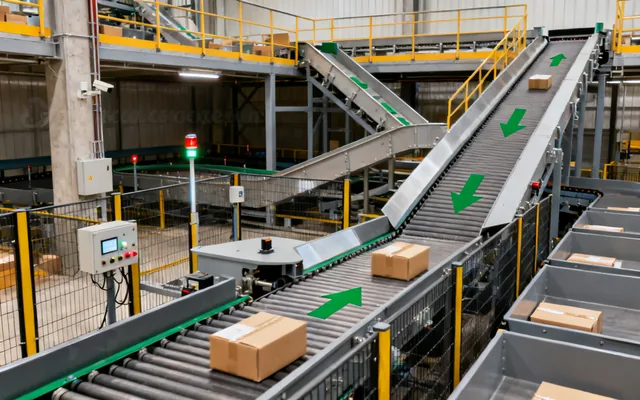
Divert accuracy and recirculation debt belong in the same brief as trunk-line throughput when destinations reject loads during waves.
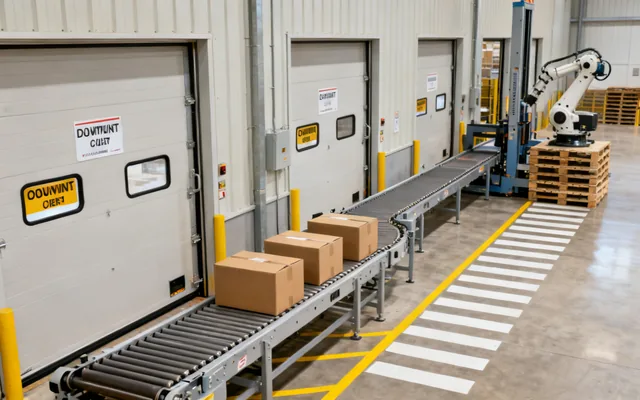
Door ownership, carrier cutoffs and palletizing pattern change how much buffer the line must absorb before a ship wave closes.
Figures above are generated-range planning values from brand configuration. They are not independently verified public claims and must not be treated as certified performance or installed-base facts.
SKU depth, peak factor, temperature and pallet/tote mix must travel together. Mobile cards keep the same fields when the matrix collapses.
| Vertical | SKU depth | Peak factor | Temperature | Load-unit mix |
|---|---|---|---|---|
| E-commerce fulfillment | Very high | Promotion waves | Ambient | Carton / tote heavy |
| Grocery distribution | High | Store cutoffs | Ambient + chilled | Case / tote |
| Cold chain | Medium-high | Door-window limited | Chilled / frozen | Insulated case / tote |
| Manufacturing staging | Medium | Takt spikes | Ambient | Tote / stillage |
| Parcel induction hubs | Client-variable | Hub sort windows | Ambient | Mixed parcel / carton |
SKU depth: Very high
Peak factor: Promotion waves
Temperature: Ambient
Load-unit mix: Carton / tote heavy
SKU depth: High
Peak factor: Store cutoffs
Temperature: Ambient + chilled
Load-unit mix: Case / tote
SKU depth: Medium-high
Peak factor: Door-window limited
Temperature: Chilled / frozen
Load-unit mix: Insulated case / tote
SKU depth: Medium
Peak factor: Takt spikes
Temperature: Ambient
Load-unit mix: Tote / stillage
SKU depth: Client-variable
Peak factor: Hub sort windows
Temperature: Ambient
Load-unit mix: Mixed parcel / carton
A useful concept review starts with actual load units, SKU velocity and demand patterns. Share ranges where final figures are unavailable; assumptions can be marked for later validation against divert accuracy and buffer occupancy.
Open the project brief